Context
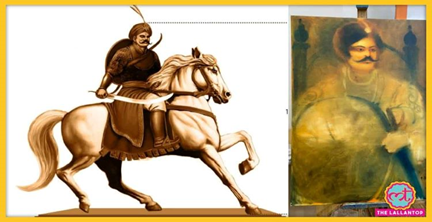
The National Monuments Authority (NMA) (set up for the protection and preservation of monuments under the Ministry of Culture) has planned to erect a statue of Anangpal Tomar II somewhere in central Delhi and develop it into a tourist spot.
- Many believe he was the founder-king of Delhi.
About Anangpal II
- Anangpal II, popularly known as Anangpal Tomar, belonged to the Tomar dynasty.
- He was the founder of Dhillika Puri, which eventually became Delhi.
- Evidence about the early history of Delhi is inscribed on the iron pillar of Masjid Quwaatul Islam,adjacent to Qutub Minar.
- The Vishnu Garud Dhwaj (iron pillar) in the Qutub complex was also brought by King Anangpal Tomar II.
- Multiple inscriptions and coins suggest Anangpal Tomar was the ruler of present-day Delhi and Haryana in between the 8th-12th centuries.
- He had built the city from ruins and under his supervision Anang Tal Baoli and Lal Kot were constructed.
- Anangpal Tomar II was succeeded by his grandson Prithviraj Chauhan.
- Delhi Sultanate was established in 1192 after Prithviraj Chauhan’s defeat in the Battle of Tarain (present-day Haryana) by the Ghurid forces.
About Tomar Dynasty
- Tomara dynasty is one of the minor early medieval ruling houses of northern India.
- According to bardic tradition, the dynasty was one of the 36 Rajput tribes.
- The history of the family spans the period between the reign of Anangpal, who founded the city of Delhi in the 11th century CE, and the incorporation of Delhi within the Chauhan (Chahamana) kingdom in 1164.
- Although Delhi subsequently became decisively a part of the Chauhan kingdom, numismatic and comparatively late literary evidence indicates that Tomara kings such as Anangapala and Madanapala.
- They continued to rule as feudatories, presumably until the final conquest of Delhi by the Muslims in 1192–93.
About National Monuments Authority
- The National Monuments Authority works under the Ministry of Culture.
- The Authority was established as per the provisions of the Ancient Monuments and Archaeological Sites and Remains AMASR (Amendment and Validation) Act, 2010.
- The aim of the Authority is to
- Work for the protection and preservation of monuments and sites.
- Management of the prohibited and regulated areas around the centrally protected monuments.
- Evaluate the permissions for construction-related activity in the prohibited and regulated area.
|